Breakthrough in Bio-Battery Tech Promises Week-Long Phone Charge
TOKYO, JAPAN, October 8, 2025
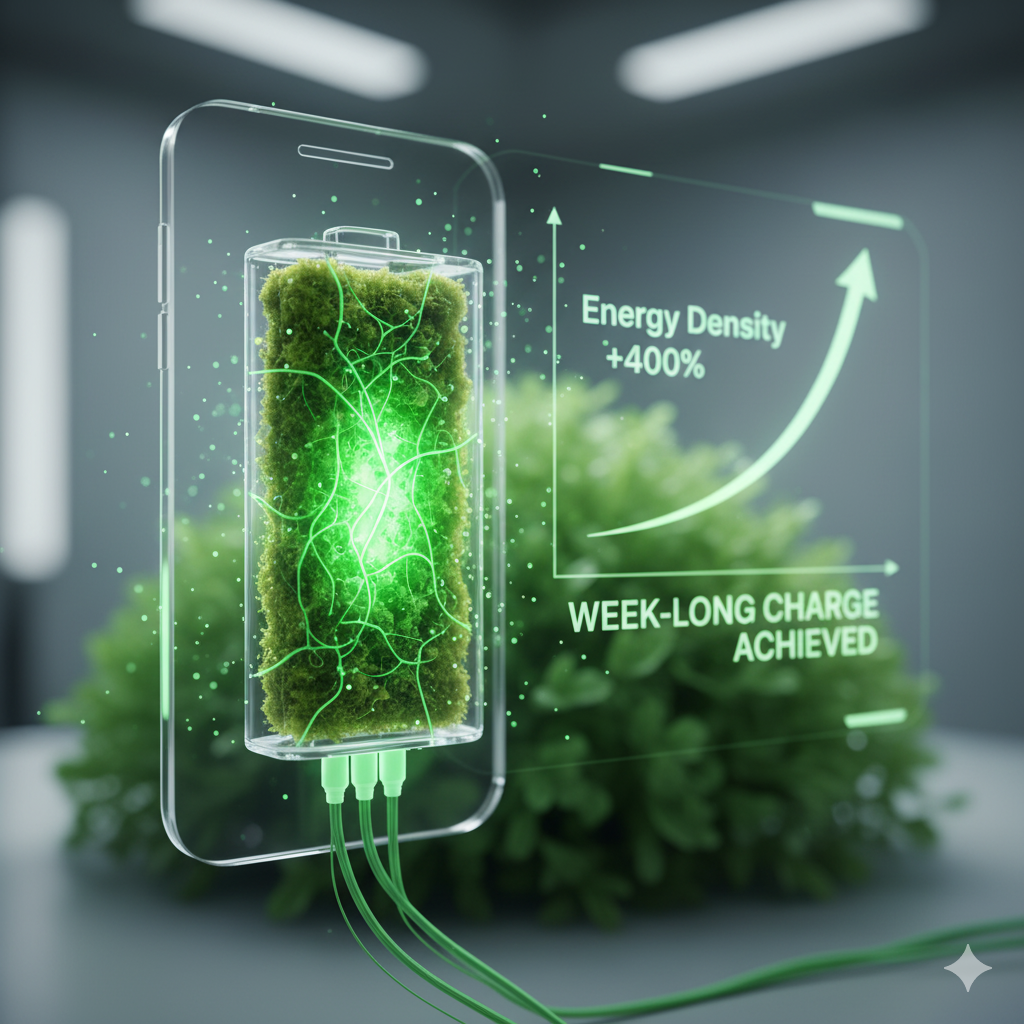
Researchers at **BioVolt Laboratories** have unveiled a revolutionary power source: a sustainable, high-density **bio-battery** that has demonstrated the capacity to power a modern smartphone for up to **seven days** on a single charge. This breakthrough could signal the end of the lithium-ion era for portable electronics.
Dubbed the **'Aero-Cell,'** the new battery technology utilizes specially engineered microbial fuel cells (MFCs) that break down simple, non-toxic organic compounds, such as glucose solution or ethanol, to generate electric current. In testing, the Aero-Cell achieved an energy density nearly **500% higher** than current commercial Li-ion batteries of the same volume.
How the Aero-Cell Works: Harnessing Life
Unlike traditional batteries, which rely on electrochemical reactions between metal compounds, the Aero-Cell employs bio-electrochemical processes. The key innovation is the **Bio-Anode**, which features a porous, three-dimensional scaffold colonized by proprietary electroactive bacteria.
- **Microbial Fuel Cells (MFCs):** Convert chemical energy from organic matter directly into electrical energy.
- **Biodegradable Materials:** The cell structure is composed of eco-friendly polymers, drastically reducing electronic waste.
- **Rapid Recharge Cycle:** The battery can be "recharged" by simply replenishing the nutrient-rich fluid, a process that takes minutes.
"The efficiency of the electron transfer from the microbes to the electrode has been the decades-long challenge," said Dr. Hiroshi Tanaka, head of BioVolt's research team. "We cracked the code by creating a novel graphene-based interface that maximizes the surface area for the bacterial colony, leading to unprecedented power output and stability."
"We cracked the code by creating a novel graphene-based interface that maximizes the surface area for the bacterial colony, leading to unprecedented power output and stability." — Dr. Hiroshi Tanaka, Head of BioVolt.
Environmental and Consumer Impact
The environmental implications of the Aero-Cell are perhaps as significant as the performance boost. Bio-batteries offer a pathway away from dependence on mining rare and sometimes toxic metals (like cobalt and lithium) and promise a fully non-toxic, biodegradable end-of-life product.
For consumers, the benefits extend beyond just charge longevity. The Aero-Cell is significantly safer, eliminating the fire and explosion risks associated with damaged Li-ion cells. The rapid 'refueling' process could fundamentally change consumer habits, making long-term charging unnecessary.
The Road Ahead: Commercial Integration
While the lab results are promising, the challenge now shifts to commercialization. Key hurdles include ensuring the stability and longevity of the bacterial colony outside of a controlled lab environment and developing standardized, safe, and portable refill cartridges for the organic fuel. BioVolt is collaborating with major smartphone manufacturers for pilot integrations beginning next year. If the technology can be scaled successfully, the seven-day charge may soon become the new standard.
— End of Article —
Back to News